
Saturday, March 6, 2010

First Whisper of Spring


I know that, for many of my readers, it is unmistakably still winter. But here in New Jersey, we have had a major thaw in the last week. The snow is retreating, and there is even a noted increase in bird noises in the morning. For me, this triggers a reflex that tells me that it is time to dance.

That may seem strange, so let me explain. Back in the years before I was a married-with-children, I used to go contradancing whenever I could. (Contradancing, if you don’t know, is a folk dance form native to New England.) This even was the start of a chain of events that led to me meeting my wife. I noticed that many of the dancers would vanish when the weather turned chilly in the fall, and returned at about this time of year. I observed this over several years; it was as reliable as bird migrations. So, even though I have not contra danced in many years, (sigh), I still associate this time of year with the return of the dancers.

k d Lang: (Waltz Me) Once Again Around the Dance Floor

[purchase]

That first dance when everyone comes back is one of the most exciting of the year. There is a sense of exhilaration that comes both from the arrival of warmer weather and being reunited with friends. k d Lang isn’t singing about a contradance, and this isn’t even a song she wrote, but her performance still conveys exactly the feeling I’m talking about.

Finjan: Dancing on Water

[purchase]

I have presented Klezmer music before, but I emphasized that faster songs. Here, the tempo comes down a bit, and the sheer beauty of the music shines through. Finjan, my sources tell me, is the leading klezmer group in Canada. Strangely, there is a connection between this track and the last one. Dancing on Water was arranged by Finjan and Ben Mink. Mink played on some of k d Lang’s best work.

Bruce Cockburn: And We Dance

[purchase]

This wasn’t supposed to be a sequel to last week’s Canadian post, but here is yet another Canadian artist. Bruce Cockburn is a socially and politically aware songwriter. He finds it impossible to live in this world without having strong feelings about what goes on in it. Here, he seeks refuge from the ills of the world in a dance. The effort is only partly successful, but the desire for refuge is beautifully expressed.

XTC: War Dance

[purchase]

Finally, we leave Canada for England. XTC also cared deeply about world events. Here, they take on a particular brand of “patriotism”. There are times when nations experience a kind of blood lust. Here in the United States, we experienced this in the wake of 9/11, and our government was only to happy to fan the flames. As XTC points out here, the results are often tragic for all concerned.

New feature: Spotlight song of the week
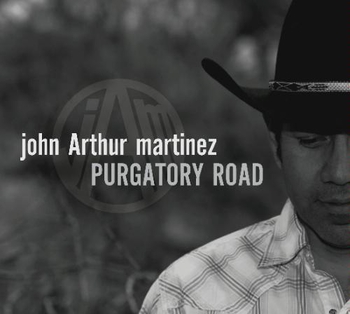


Here is a new feature on Oliver di Place. I started this blog because I believed that the world is full of great music that too few people were getting to hear. Now I am even more convinced that this is true. The fact is that I receive more great albums than I can review, even at a rate of an album a week. So now I will feature a song from some of these albums in this spot. The artists featured here are just as worthy as those I give full reviews. This just gives me a way to share more of my discoveries with you. I will also use this space for artists who do not have anything new out, but who I only just discovered.

john Arthur martinez: Cobalt Blue

[purchase]

Country music is comfort music, even when the subject matter is grim. Musically, there are no major surprises, but that does not preclude the possibility of fine musicianship. The lyrics cover a limited range of subjects. So the listener knows more or less what to expect, and the most important factor is the sincerity of the performance. And john Arthur martinez delivers a wonderful performance here.

One of the big problems I have with mainstream, (read: major label), country is the production. Sometimes, everything is scrubbed clean of any personality and given a pop sheen, while other times the chorus builds to a 70s rock crescendo, completely obliterating any chance of subtlety. Martinez avoids these traps, and delivers a set of songs that offer all of the comforts of country as performed by someone who means it. The best of all are the songs he wrote by himself. There are three songs here by other writers, and four co-writes. All sound to me like bids to insure commercial acceptance. But the four songs martinez wrote by himself are the highlights for me. These add organ parts to the mix, as well as female backing vocals. These songs have an honest country feel, but also a soulfulness that fits in beautifully. Cobalt Blue also has an interesting lyric. Is the Cobalt Blue of the title a woman or a drink? I think the answer is yes. I like the ambiguity.

So I will put this one on when I’m looking for musical comfort food. And I hope that martinez’ next one includes more solo originals.

Saturday, February 14, 2009

Love Songs


Happy Valentine’s Day to all. Today is the day to hear love songs.

There is perhaps no subject which has inspired more songs than love. Therefore, it is the subject which has inspired more terrible songs than any other. To compound the problem, love makes people lose their minds. In a recording studio, that means oversinging in abundance, and overproduction to match. Often, the pure emotion gets lost amidst the clutter of the arrangement.

Fortunately, there are also times when love conquers all, and the feeling shines through.

K D Lang: Miss Chatelaine

[purchase]

K D Lang has a big voice, and the production here uses a full band with strings. But, the strings are not a solid wall of sound overwhelming everything else; Lang uses a small section of strings where all the parts can be heard. And Lang has a voice which can carry this kind of arrangement without straining for the notes.

Miss Chatelaine tells of the exhilaration of a first kiss, and the excitement of the experience comes through loud and clear. The slow tempo allows the warmth that starts in the lips to suffuse her spirit in the course of the song.

John Hiatt: Have a Little Faith in Me

[purchase]

While we’re on the subject of first kisses, I can never hear this song without thinking of the climactic scene in the movie Benny and June. This is the song that plays while the title characters have their first kiss. The emotional barriers have been swept away, and love prevails. For me, this is the greatest screen kiss of all time.

Inexplicably, Have a Little Faith in Me was left out of the soundtrack album for the movie. I assume there was a problem with the rights, but, if it had been me, I would have done whatever was necessary to include it.

Jane Siberry: Lovin‘ Cup

[purchase]

Lovin’ Cup has a simple, almost simplistic, lyric. The song conveys a rush of joy that comes with the experience love; this joy is expressed almost entirely through the music. I think the message here is that, when in it comes to love, sometimes there are no words to express it.

Nanci Griffith: Love at the Five and Dime

[purchase]

That first rush of love is only the first step on a journey. Nanci Griffith takes on that journey, showing that their are missteps and obstacles along the way. But her protagonists are able to keep their love through music. I can think of no better way to end a post on love songs than this.

I would like to dedicate this post to the love of my life, my wife Janice.

Friday, January 16, 2009

I Love/Hate 70s Music


I have very mixed feelings about the “popular” music of the 1970s. On the one hand, here is a list of some of the my all time favorite albums, which I will probably have more to say about in future posts: Dixie Chicken by Little Feat, The Hissing of Summer Lawns by Joni Mitchell, Late for the Sky by Jackson Browne, The Royal Scam by Steely Dan, Working Man’s Dead by the Grateful Dead. All were released in the 70s. But, I would say, none of these represents the trends in popular music of the decade. All but the Steely Dan album occupied low chart positions if they charted at all. And Steely Dan never inspired many imitators, because their music was too complex.

The music trends of the 70s, to my ear, involved taking something good and true, and turning it into mush. The Beatles experimented with distortion and other new guitar sounds, as did the blues-rockers of the 60s; in the 70s, this morphed into the excesses of hard rock and heavy metal. The great energy of funk became the robotic formula of disco. The fusion jazz that Miles Davis invented became formulaic, and edged out musicians playing other types of jazz from the spotlight. The early honesty of the singer-songwriters became cliche ridden, and honest feeling became overwhelmed by insipid productions involving cookie-cutter string parts.

All of these things were symptoms of one thing: the emphasis in the music business went from music to business. People who had risen in the ranks of the major labels, driven by their love of the music, began to be edged out by people with business backgrounds but no particular interest in the music for its own sake. The labels themselves started to become part of larger corporations, and the bottom line began to take over. The most popular artists began to receive the most expensive productions, whether it served the music or not.

At the end of the decade, there was a backlash which gave the world punk rock. This, and the rise of MTV in its original form, would loosen things up, and the 80s would be somewhat better. But, to my ear, a random selection of greatest hits of the 70s contains more bad music that any other decade.

As I have gotten older though, I have come to realize something: not all of the bad music of the 70s consisted of bad songs. Sometimes, a cover version reveals that the song was never the problem at all; rather, it was something about the performance or the production.

Dolly Parton: Stairway To Heaven

[purchase]

I am well aware that many people love Led Zeppelin. The very qualities that they so admire are the ones that send me to the exits. I find Robert Plant’s screaming vocals painful to listen to, especially knowing that he has a great voice when he chooses to sing with more subtlety. And the same goes for the scream of the guitars, again knowing that these musicians can do brilliant things when they choose to play with more subtlety. So nothing is more aggravating to me than Stairway to Heaven. The song begins with all of good qualities on full display. Then, we get to the bridge, and disaster strikes, and the screaming begins.

But Stairway to Heaven is a great song. Dolly Parton, (of all people!), finds all the qualities in the song that I always liked, and does not sabotage them as Led Zeppelin does. And she does this in a bluegrass treatment that really works. Ironically, Dolly Parton is one of those people whose 1970s output was much afflicted with many of the problems I discussed above.

k d lang: Helpless

[purchase]

I am also aware Neil Young is an idol to many. And I can appreciate his talent as a writer. Furthermore, what I have heard of his 70s output is not marred by many of the qualities I discuss above. I just can’t stand his voice. If you’ve ever gotten a fax machine on the phone by mistake, and had your ears assaulted by that high pitched squeal, you have an idea how I feel about the falsetto that Neil Young used on songs such as Helpless early in his solo career. And even his natural voice, which I have heard more and more as he gets older, bothers me.

k d lang is an artist who was demonstrated, with her song Summer Fling, that she has a weakness for some the worst excesses of 70s production. Indeed, her version of Helpless swells at the chorus, and the strings come in and almost ruin what is a nice subtle arrangement on the verses. But this is not the wall of strings that overwhelms everything in a 70s production; here, the listener can distinguish the individual string parts and the other instruments. And, of course, k d lang possesses one of the finest voices in popular music.
