Saturday, November 13, 2010

A Song Chain


A song chain is a game. It’s a variation on word association. We all played that as kids, where you call out a word, and the next person calls out the first word they think of. So think of a song, and then the next song you think of, and so on. Let me show you how it works.

Richard Thompson: Crawl Back (Under My Stone)

[purchase]

My wife and I were talking earlier today about trying to find a concert or something special to do, just for the two of us, for a treat as the holidays approach. We did this a few years ago, and our treat was a Richard Thompson concert. He doesn’t get to area again until March, so we’ll have to do something else this year.

Usually, my posts of Thompson’s songs, both here and on Star Maker Machine, tend to focus on his softer side. Songs like Beeswing and Vincent Black Lightning show off Richard Thompson the storyteller. But the man can also flat out rock. Crawl Back is a fine example. Take the words literally, and the song seems to be an apology by a man who feels that he has let his lover down. But Thompson’s delivery makes it clear that this is actually a brush-off song. He’s telling her that her standards don’t suit him, and he’s gone. It’s powerful stuff, and one side of Thompson at his best.

Linda Ronstadt and Ann Savoy: King of Bohemia

[purchase]

Thinking of Richard Thompson reminded me of one of my favorite covers of his songs, King of Bohemia as performed by Linda Ronstadt and Ann Savoy. I’m partly posting this as a kind of apology to readers of Star Maker Machine. Quite some time ago, I posted this song there. At the time, I was having problems with my file host, and in the end, I actually had to change hosts. The result was that this song was only up for an eye blink, and many people may have missed it. So here it is again. This time, my hosting situation is solid, so everyone should have a chance to hear it. You can read my original thoughts on the song Here.

Ann Savoy is a well known Cajun musician, and that naturally made me think of…

Beausoleil: Zydeco Gris Gris

[purchase]

…Beausoliel. It isn’t usually hard to match an artist to the best venue for their performance. There should be good acoustics, and some acts may need a piano. Usually, the hardest thing is deciding how large an audience you need room for. But I once saw Beausoleil, and there was another consideration. Symphony Space in New York City is a nice mid-sized hall where I have had the great pleasure of seeing some of the operettas of Gilbert and Sullivan. The problem for a Beausoleil show there was the fact that the seats are bolted to the floor. This is not a band to sit and listen to. Seats or no seats, everybody got up and danced in the limited space in the aisles. We were most likely in violation of the fire codes that night. It was a great show though.

The song Zydeco Gris Gris is a fine example of Beausoleil’s artistry. The term Gris Gris refers to magical practices in New Orleans, and that reminded of me our recent Magic theme on Star Maker Machine. A strange thing happened that week: no one posted a song with the word magic in the title. I really though someone would post…

Peter Green: Black Magic Woman

[purchase]

…this one. Black Magic Woman is the song that was a hit for Santana back when. But it was written by Peter Green, for the blues band he was in at the time. Perhaps you’ve heard of Fleetwood Mac? Green was one of the founders of the band, but he didn’t stay long, and he was long gone by the time they reached the height of their popularity. Green had some serious problems that kept him out of the music business for many years. But by 2003, Green had a band, and he revisited some of his old material. I like his vocal on this remake better than the Fleetwood Mac original. The song as done here is also twice as long as the original version. Although this is a studio recording, it has the feel of a live jam, and a fine one.

Call for Help:

Mary Bragg: Sweet Skin

[purchase]

Donate here

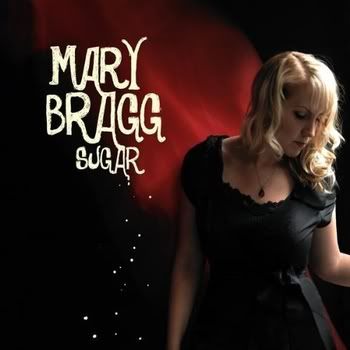
The picture above may look familiar. I reviewed Mary Bragg’s last album Sugar here, and I included the song Sweet Skin. Listening to it again, I am struck by the way Bragg combines the funky bass line with the bluesy harp and vocal. It really works.

I don’t have any songs to share from Bragg’s next album at the moment. She is raising money to record it, by way of a Kickstarter campaign. I described how that works last week, but the key point is that Bragg needs to hit her goal by her deadline, or she gets nothing. So I ask anyone who can to please help. Thank you.

Saturday, May 22, 2010

Welcome, Summer


When does summer begin? In New Jersey, where I live, it was 86 degrees today. But we topped that in March, so that’s not the answer. The ancient Celts marked the beginning of summer with the festival of Beltane. They observed the blooming of certain trees, and Beltane marked the end of the planting season and the beginning of the growing season. This occurs somewhere around May 1, but it moves depending on the weather. This year, it was early. Today, summer begins when school gets out. So, for kids, it is still spring, but my wife is an adult learner, and she got out last week. So, by many measures, summer is here, and I thought it was time to acknowledge it.

Richard Thompson: Sumer is Icumen In

[purchase]

The title of this song translates into modern English as “Summer is Coming In”, so I know it fits. The song dates from about 1260, so the language of the rest of the lyrics would require a translation that I do not have. It certainly feels right. I always feel a burst of excitement at the arrival of summer, and this song has that.

Herbie Hancock (with Joni Mitchell): Summertime

[purchase]

Of course, this post had to have a version of the Gershwin classic Summertime. The only problem was, I didn’t have one. But I found something wonderful. I hadn’t known that Joni Mitchell had worked with Herbie Hancock before the River album. If anything, this performance may top the version of The Tea Leaf Prophecy from that album. Joni nails the soulfulness of this song, and Hancock’s playing is brilliant, as always.

John Cougar Mellencamp: Hotdogs and Hamburgers

[purchase]

Here is a classic set up for a summer romance song. The guy gets the girl to get in his car and go for a ride. You can imagine the top down, and the wind blowing their hair around. But John Mellencamp takes it someplace unexpected. His later work has been overtly political, but Hotdogs and Hamburgers was from The Lonesome Jubilee. Mellencamp, at this point, was still doing everyman rock anthems, and this feels like it will be one of them. The Authority Song is certainly rousing, but it has no particular issue in mind. Hotdogs and Hamburgers does. Mellencamp’s protagonist gets to know this girl, and what he learns and how he reacts take both him and us by surprise. My friend Boyhowdy says that Mellencamp is a very underrated songwriter. On this evidence, I must agree.

Joni Mitchell: Harry‘s House - Centerpiece

[purchase]

For me, Harry’s House - Centerpiece is centered on one image: “Her body oiled and shining, at the public swimming pool”. Harry, a traveling businessman, thinks back on what his marriage was compared to what it is, and that image is the transition point in his reflections. It’s a very powerful one. Unlike with John Mellencamp, I don’t have to tell anyone what a fine songwriter Joni Mitchell is. But here’s more proof.

Spotlight Song of the Week:


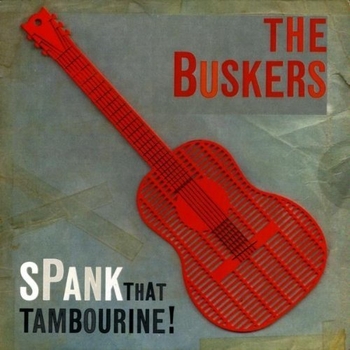
The Buskers: Spank That Tambourine

[purchase]

Growing up, I used to make trips by bus into New York City with my best friend every summer. One of my favorite thing about these trips was stopping to listen to the street musicians, or buskers. I heard some truly amazing music that way. Now there is a trio from Vermont called the Buskers. In my mind, that’s quite a name to have to live up to. The Buskers manage it beautifully.

Spank That Tambourine, the album, is a wonderfully varied collection. There are folk rock numbers, like the title track. There are some bluesier numbers, including a cover of the Taj Mahal classic, She Caught the Katy. And there are some instrumentals that remind me of the work of David Grisman. The Buskers make it all work, and Spank That Tambourine also works as a coherent album. Spank That Tambourine, the song, is an ode to buskers. It is delivered with the good cheer that a busker must have no matter how they actually feel at the time. Enjoy the song, and don’t forget to drop some coins, or even a bill, in their case.

Thursday, April 29, 2010

For a Song: Beeswing


Richard Thompson: Beeswing

[purchase]

Celtic legend is full of tales of people who take supernatural lovers, only to have those lovers disappear as mysteriously as they originally appeared. The tale of the selkie may be the most familiar of these tales, but it is only one example of many. Although there are no supernatural elements in Richard Thompson’s song Beeswing, it has some of that same quality. The girl here is never named, and she has a wildness that compares to the magical natures of these supernatural lovers. Like them, she cannot be tamed, and must eventually return to her point of origin. I do not think that this is coincidence. Thompson gives the song a musical setting which suggests traditional Celtic music. And Thompson’s lyrics elsewhere, particularly in his work with Fairport Convention, show a deep understanding and love of Celtic lore.

Saturday, January 23, 2010

Journeys By Water


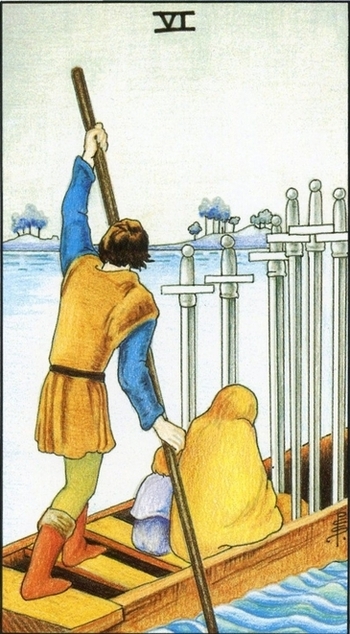
The image I have chosen for this post is the tarot card for the six of swords. I enjoy the artwork in tarot decks, and understanding the meaning of the cards helps me appreciate the intent of the artist. But sometimes, people get carried away, and make their interpretations overly esoteric. The classic image for the six of swords says it all: the card signifies a journey by water. This can be taken literally. Metaphorically, it represents a rite of passage. This kind of journey often involves a triggering event, often emotionally painful, which prompts the journey in the first place. The card shows the journey in progress; it has nothing to say about the outcome.

Al of the above applies equally well to songs about journeys by water. Let’s consider some examples.

Hem: Sailor

[purchase]

Sailor is a song of yearning. The narrator is in love, but does not know if her love is returned. She will leave the shore to see the object of her affection, and hope for the best. The lyric is pretty simple, but Hem does a beautiful job of filling in the blanks with the musical setting.

Richard Thompson: Mingulay Boat Song

[purchase]

Mingulay Boat Song is thought by many to be a traditional Scottish folk song. It describes the life of a crew of simple fishermen, eager to come to shore and be reunited with their families. But the song is actually a nostalgic piece, idealizing a life that no longer existed at the time it was written.. The island of Mingulay, of the coast of Scotland, had been occupied continuously for at least two thousand years, until it was abandoned in 1912. Mingulay Boat Song, however, wasn’t written until 1938, by Sir Hugh S Roberton, in Glasgow. Roberton wrote the song for the Glasgow Orpheus Choir, which he directed from 1901 to 1951. The choir started as an amateur choir associated with a men’s work society, but Roberton set high standards for the group. In time, they would achieve a measure of fame, both in Europe and North America.

Mingulay Boat Song has passed into the folk cannon by now. Richard Thompson’s performance clearly shows why.

Elvis Costello: Last Boat Leaving

[purchase]

Returning to our theme of rites of passage, we come to Last Boat Leaving. Elvis Costello wrote this one, under his given name of Declan McManus, for a movie called The Courier. The film tells the story of a man who discovers that the courier company he works for is a cover for a big-time drug dealer. After Costello finished the song, the film makers changed the ending of the movie, and the song no longer worked. So a shorter instrumental version was used in the film, and the full version heard here was released on Costello’s next album.

I assume that the original version of the movie had the hero going to jail at the end. Last Boat Leaving is a tale of a man regretting his actions once he finds that he is to be separated from his family and sent to prison. Clearly, for him, this will be a rite of passage. The man who left will not be the same man who returns. It’s not necessary to see the film to appreciate this song, and I have never seen it. The song speaks for itself.

John Wesley Harding: William Glenn

[purchase]

William Glenn is another song of crime and punishment. Glenn is a sea captain who has committed a murder on land for the love of another man’s wife. When he and his crew set out to sea, they are beset by a deadly storm. Once the crew learns of Glenn’s crime, they cast him overboard. Immediately, the storm ceases, and the crew is saved. Glenn’s journey takes him to the point where he can admit his guilt, and save his crew if not himself.

The song lightly touches on an old Celtic belief. Death, the ultimate rite of passage, is often depicted in the old tales as a journey over water. The spirits of warriors who fell in battle would be collected and taken to the sacred island of Tir na Nog. In many of the oldest songs of the British Isles, one finds death and the ocean side by side.

Sting: The Wild Wild Sea

[purchase]

The Wild Wild Sea, it seems to me, is a tale of a haunted dream. The black sails suggest death, and the way the character appears in the song suggests that the father is a ghost. Indeed, the song comes from Sting’s album The Soul Cages, which he wrote while dealing with the deaths of his parents. Just as William Glenn presents the journey toward death as a voyage through a stormy sea, so is the journey through the mourning process. I have several friends, and I can also include myself in this, who recently lost a loved one. May this song help us on our journey as well.

**********************************************************

So there are many different kinds of rites of passage, and there are many different kinds of songs of the sea to describe them. Likewise, the six of swords embodies all of these different meanings. I see no reason to look for more.

Friday, November 20, 2009

Waltz Time, Part II


Welcome to part II of Waltz Time. This time, a waltz is a dance. But not just a dance. Two people hold each other close, and, for a brief moment, the rest of the world does not exist. This moment can be a pause, before reality once again asserts itself. It can be the culmination of a long build up. Or it can be a transformative event, after which nothing is ever the same. But one thing is for sure: the waltz is a moment of magic.

Richard Thompson: Waltzing‘s For Dreamers

[purchase]

Richard Thompson can feel this magic, but here, he can not allow himself to believe in it. Waltzing’s For Dreamers comes from fairly early in Thompson’s solo career, or not that long after his breakup with former wife Linda. A waltz with a stranger provides a temporary refuge from heartbreak, but it cannot last.

David Wilcox: Last Chance Waltz

[purchase]

David Wilcox’s character here looks forward anxiously to a waltz with a woman he was interested in in high school, but could never bring himself to pursue. Now, at his tenth reunion, he has one last chance to declare his love. She is spoken for, so it can go nowhere, but he still feels the need to do what he could never do before. The magic of the waltz makes it possible.

Incidentally, the female voice on this track may sound familiar. It’s Mary Chapin Carpenter.

Small Potatoes: Waltz of the Wallflowers

[purchase]

Waltz of the Wallflowers is a fairytale. I was painfully shy in high school, so this one hits home. I always wished for two things: that I would have the guts to do something like this, and that it would work out this well. But don’t stare!

Owen Roberts: New Paltz Waltz

[purchase]

In New Paltz Waltz, the magic is more akin to a renewal of vows. The waltz here is a reminder of love, and a refreshing of it. Again, putting aside the world and its cares for a brief moment is the key. I don’t like my love songs to be sappy, but I do like them to be tender. New Paltz Waltz is one of the tenderest I know.

Over the Rhine: Mary‘s Waltz

[purchase]

This one comes from an Over the Rhine Christmas album, but it is no more a Christmas song than Joni Mitchell’s River. The song is mysterious, which fits a tale of sharing secrets. The waltz here is metaphorical, but still represents a safe space where the world cannot intrude.

********************************************************

So there is my journey through the waltz. Before I leave, I would like to quickly thank my fellow posters at Star Maker Machine for their help in gathering songs for this post and the last one. And I would like to thank my readers once again for your kindness and good wishes. I feel very fortunate to have created something that has attracted such a fine group of people, and I will continue to try to offer good reasons for you to come back.

Friday, September 4, 2009

Married to It


Marriage was, for me the culmination of a process. My wife and I began as you and I, and became we. At some point, it stopped mattering who paid for what. We stopped taking turns deciding what to do when we were together, and began to discuss and come to an agreement. And, as the relationship deepened, we began to share music with each other, until it became our music collection. Even so, there are, to this day artists who are my artists, and those who are hers. We both enjoy listening to them, but one of us more so than the other. And there artists who have become favorites of mine, but who I can definitely thank my wife for bringing to the relationship.

Jethro Tull: Cup of Wonder

[purchase]

Like everyone I knew at the time, I had heard the song Aqualung. But that was as far as my knowledge of Jethro Tull went. That was not enough to make a connection to the British folk-rock of Fairport Convention and Steeleye Span. But that connection is real. Some of the same musicians who drifted into the lineups of Fairport and Steeleye later joined Ian Anderson’s crew. But it was my wife who introduced me to the Tull albums Minstrel in the Gallery, and especially, Songs From the Wood. And that’s how I made the connection.

Billy Joel: Summer, Highland Falls

[purchase]

Billy Joel was a little different for me. I knew his music pretty well, so I thought, before my wife and I ever met. How could I not, being in high school in the mid-seventies? But my wife’s love of his music made me reassess my own feelings about him. I had regarded him as pleasant pop, but my wife taught me to really appreciate his song writing.

Dar Williams: You‘re Aging Well

[purchase]

We used to listen to the radio a lot in the car. There is a very good public radio station in our range, that has introduced us to many fine artists. Since my wife spends more time in the car than I do, she often learns of an artist this way before I do. Dar Williams was one of these. Williams’ duet partner here is Joan Baez. We both knew about Baez before we ever met.

In time, we gave in and joined the CD generation. Later, we started burning our own discs from mp3s. So we don’t listen to the radio as much any more.

Tori Amos: Crucify

[purchase]

Tori Amos was another artist who my wife heard on the radio and brought to my attention. But, this time there was a twist. Crucify comes from Amos’ debut album, in 1992. The album had a great sound which my wife really liked. But, in subsequent albums, Amos’ took her sound in a direction my wife didn’t care for nearly as much as I did. So Amos began as one of my wife’s artists, and became one of mine.

Richard Thompson: Beeswing

[purchase]

I was the one who brought the music of Richard Thompson to our relationship. But my wife took to him right away, and I have come to rely on my wife to let me know what Thompson is up to.

Thursday, June 25, 2009

Songwriters React To War


My parents came of age just in time for World War II. They used to tell me how the whole country united behind the war effort. My Father was proud of his small part in helping to defeat the Nazis; he saw it that way, even though he served in the Pacific. And the history books reinforce the fact that this was a war that everyone in America believed we had to win.

But my coming of age occurred during the Vietnam War. That same father took me to my first peace march. The country was sharply divided over whether we needed to win or leave. And it has been this way, in varying degrees, for every war the US has been involved in in my lifetime.

So just as does the public at large, songwriters feel a mix of emotions when their country goes to war. The emotions are always running high, and often drive the creation of some of their finest work.

The songs I am presenting do not present a balanced survey of songwriters’ responses to war. There are songwriters whose work on the subject suggests that they believe that the country is always right in wartime. But the examples of songs that I have heard from them seem to me lacking in nuance. Or perhaps, it’s just a question of my personal biases. In any case, I stand by my selections as showcase of the variety of ways songwriters deal with what is for many people a difficult subject to discuss.

Norman Blake: Graycoat Soldiers

[purchase]

Norman Blake wrote Graycoat Soldiers in the shadow of the Vietnam War. But Blake evidently wanted some distance from his subject. So the song, about the homefront, takes place during the Civil War. The song is an eloquent depiction of those who get left behind in war.

Gray coat Soldiers is a first for me, and something you won’t see very often. I posted the song some time ago on Star Maker Machine. I won’t normally repeat myself this way, but I couldn’t see addressing this theme, and leaving this one out.

Tom Waits: Soldier‘s Things

[purchase]

Tom Waits writes about the effect of war on people in a unique way. He imagines a war widow holding a yard sale, and selling all of her soldier husband’s decorations from the war. “Everything’s a dollar in this box”, she croons. By not specifying which war this was, Waits crafts a song which describes the pain of losing a loved one in a war in a universal way.

Peter Gabriel: Games Without Frontiers

[purchase]

Peter Gabriel takes a mix of characters who represent current and historical figures, and makes them children on a beach. Their fight for territory is just a game to them, but Gabriel reminds us that the consequences are all too real. Gabriel is not writing about a specific war, but the attitude of the song is reflective of British attitudes about World War I. It would seem that this is a war that has cast a long shadow on the Brittish psyche. Some of the character names Gabriel uses also suggest World War II, but I think Gabriel did this to make the song more universal.

XTC: Generals and Majors

[purchase]

XTC’s Generals and Majors appeared the album Black Sea. Much of this album was XTC’s response to the Falklands war. But Generals and Majors is about war in general. The band is criticizing the elements of society that seem to always want to lead us into war.

Richard Thompson: Dad‘s Gonna Kill Me

[purchase]

Richard Thompson is not interested here in universality. Dad’s Gonna Kill Me is about the Iraq war. “Dad” is what the soldiers over there call Baghdad. Thompson takes the role of a soldier stationed there, and depicts him as believing that he will never return home alive.