Wednesday, December 1, 2010

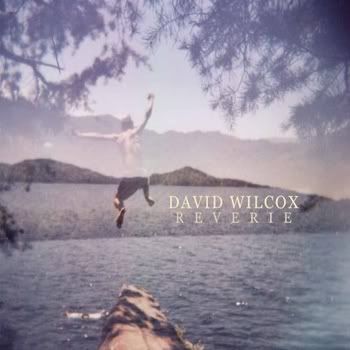
David Wilcox -Reverie


[purchase]

I’ve heard songs by David Wilcox over the years, and I reviewed his last album, Open Hand. But the new album, Reverie, marks the first time I have heard him in mostly a solo setting. There is percussion on One Way to Find Out, and the title track has, I believe, three other musicians on it, but the rest is just Wilcox and his guitar. Over the course of fourteen songs, that could have been a long album. So the great revelation for me here is just how good a guitar player Wilcox is. He displays a great versatility here in terms of the styles and techniques he brings to his playing. No two songs sound the same, and yet there is never any doubt of whose songs they are. The other treat here musically is that Wilcox’ voice sounds great. In my review of Open Hand, I praised Wilcox’ singing, and I saw no reason to mention that it sounded different than it had on the older albums of his that I have. On Reverie, he sounds more like the younger Wilcox. The subtlety that I admired last time is still here, but, on Reverie, Wilcox’ voice sounds stronger, and he sounds like he can sing exactly what he wants to here.

Lyrically, Reverie is something of an emotional tug-of-war. End of the World (Again) opens the album, and it gives no indication of what is to come; this is a drolly humorous look at doomsday prophecies, (another one?). Next comes Shark Man. Here, Wilcox’ narrator becomes menacing as a relationship sours. Having once stood by a female friend as she worked her way out of an abusive relationship, I find this song hard to listen to.

Then comes Cast Off, and the themes of the album come into focus. The song starts with a person literally having a cast removed from a broken arm that is not fully healed. The patient has become so used to the cast that he or she no longer has the confidence to do without it. The cast becomes a metaphor for becoming dependent on a state of weakness, and the situation is described beautifully. Then, something surprising happens; at the very end of the song, the plaster of the cast becomes the plaster of a church ceiling. What had been a song about a relationship turns into a meditation on the dependence on organized religion. The amazing thing is, you don’t feel like Wilcox has misled you; the thematic shift makes sense, and the song works as a coherent whole. This is one of the most remarkable pieces of songwriting I have ever heard. From then on, Reverie alternates between relationship or personal songs and songs about the world at large. Issues include the religious right, strife in the world between faiths, and the hypocrisy of “patriots”. These worldly songs never get strident; however, Little Fish and We Call It Freedom are gently tongue-in-cheek, and I could see how a listener might miss the satire, and think that Wilcox actually means the words he sings. The more personal songs include the two cowrites on the album. Angeline, the beautiful love song that closes the album was written with Gary Jules. David Wilcox and Billy Jonas perfectly describe the point in a relationship where you decide to dare to fall in love in One Way to Find Out. Wilcox talks about how he feels connected to the tradition of music in Ireland; from the sound of it, if he and I were in Ireland at the same time, me might meet each other while looking for music and musicians.

David Wilcox recorded Reverie in front of a live audience, who were instructed not to applaud until they were sure that each song was over. He says in the liner notes that he was looking for the energy that a live audience gives him. I would say that he found it. Wilcox brought that audience a fine set of songs, which they got to hear before anyone else. I would call that a fair trade.

David Wilcox: Cast Off

David Wilcox: Ireland
Tuesday, July 6, 2010

For a Song: Distant Water


David Wilcox: Distant Water

[purchase]

Due to the holiday weekend, I did not get the time I needed to prepare for this week’s album review. So I’m switching it with the For a Song feature, and the review will appear later this week.

As I write this, we here in New Jersey have just endured one of the hottest days I have ever experienced. The temperature reached 106; it has literally been years since we last had a day over 100. Readers in Phoenix and places like that may be wondering what the big deal is, but here these temperatures come with high humidity. I posted Long Tall Cool One two weeks ago, and I thought it was hot then. Little did I know. To make matters worse, it has not rained in almost a month. There is (usually) a little stream near my house, but today I noticed that the bed is getting dry, and the fish are scrambling for places to swim. So I am expecting an official drought call any day now. Hence, Distant Water.

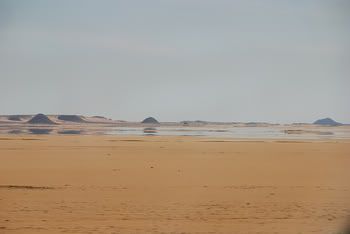
David Wilcox is talking about an emotional drought, but his metaphor is very real to me right now. Wilcox is a fine writer, and his description of watery mirages reminds me of the days we have had recently where it really looked like it would rain, but it never did. The emotion of this song resonates all the more with me now because of our weather.

Saturday, January 30, 2010

It’s About Time


Time is my theme this week. I can think of a number of puns to describe many of the available songs on the subject. “That’s really old”, for example. Time is something we all live with, so it is the subject of almost as many cliches as love. Even the titles of my selections reflect this. Nevertheless, each of these artists finds something fresh to say on the subject, or a fresh way to say it.

Dee Carstensen: Time

[purchase live version]

[support Dee Carstensen by purchasing the original studio version here]

Dee Carstensen contemplates old age and mortality in Time. Her narrator has reached a point in her life where her main concern is the emotional legacy she leaves in her children. The spare arrangement heard here is from a live performance at the Kerrville Folk Festival, and it suits the material beautifully. That string instrument that sounds wrong to be a guitar is a harp, Carstensen’s main instrument.

In researching this post, I learned that Carstensen had been diagnosed with liver cancer, and that she had received a liver transplant. After 2007, information is scarce. So if anyone knows what and how she is doing now, please share that information in the comments. Thank you.

David Wilcox: It‘s Almost Time

[purchase]

David Wilcox starts It’s Almost Time as a statement of faith that a long cold winter is almost over. He sets his song firmly in a seaside town. I don’t live at the shore, but here in New Jersey, we just had a week of weather which gave a tease of spring, but now we have settled back into winter. That only makes it feel colder, and makes this song resonate more. By the end of the song, it is clear that this winter is emotional as well as meteorological. No one that I know of puts this kind of song over better than Wilcox, and this is no exception.

Tracy Chapman: This Time

[purchase]

This Time is a resolution to not get hurt again. Or maybe it’s a reminder. Either way, this is a rebound song. Chapman’s character has been through a hurtful relationship, and she wants the guy to take all the risks this time. The narrator may be trying to break a pattern that has haunted her through a series of relationships. Chapman presents the resolve, but also the uncertainty that her narrator can go through with it.

Just as the words present a state of emotional flux, so too does the music. Passages with not much more than acoustic guitar and voice alternate with pulses of the full band. Throughout, a ghostly violin part haunts the narrator, reminding her of her doubts.

Peter Himmelman: Time Just Flew

[purchase]

Time Just Flew looks back at a long-term relationship, and also takes stock of its current condition. The conclusions are unclear. Time in this one is a windstorm, sweeping away everything in its path. So the song is an emotional catching of breath. I think that’s an important thing to do, but it can be more than difficult to find the time.

Lyle Lovett: Since the Last Time

[purchase]

The emotions in this post have been pretty heavy, so let me end things on a joyous note, at a funeral. I’m serious. In New Orleans, funerals are occasions to celebrate the life of the departed. There are parades, and happy recollections. Sorrow follows later perhaps, and in private. Lyle Lovett does not come from New Orleans, but this song reflects this spirit.

Friday, November 20, 2009

Waltz Time, Part II


Welcome to part II of Waltz Time. This time, a waltz is a dance. But not just a dance. Two people hold each other close, and, for a brief moment, the rest of the world does not exist. This moment can be a pause, before reality once again asserts itself. It can be the culmination of a long build up. Or it can be a transformative event, after which nothing is ever the same. But one thing is for sure: the waltz is a moment of magic.

Richard Thompson: Waltzing‘s For Dreamers

[purchase]

Richard Thompson can feel this magic, but here, he can not allow himself to believe in it. Waltzing’s For Dreamers comes from fairly early in Thompson’s solo career, or not that long after his breakup with former wife Linda. A waltz with a stranger provides a temporary refuge from heartbreak, but it cannot last.

David Wilcox: Last Chance Waltz

[purchase]

David Wilcox’s character here looks forward anxiously to a waltz with a woman he was interested in in high school, but could never bring himself to pursue. Now, at his tenth reunion, he has one last chance to declare his love. She is spoken for, so it can go nowhere, but he still feels the need to do what he could never do before. The magic of the waltz makes it possible.

Incidentally, the female voice on this track may sound familiar. It’s Mary Chapin Carpenter.

Small Potatoes: Waltz of the Wallflowers

[purchase]

Waltz of the Wallflowers is a fairytale. I was painfully shy in high school, so this one hits home. I always wished for two things: that I would have the guts to do something like this, and that it would work out this well. But don’t stare!

Owen Roberts: New Paltz Waltz

[purchase]

In New Paltz Waltz, the magic is more akin to a renewal of vows. The waltz here is a reminder of love, and a refreshing of it. Again, putting aside the world and its cares for a brief moment is the key. I don’t like my love songs to be sappy, but I do like them to be tender. New Paltz Waltz is one of the tenderest I know.

Over the Rhine: Mary‘s Waltz

[purchase]

This one comes from an Over the Rhine Christmas album, but it is no more a Christmas song than Joni Mitchell’s River. The song is mysterious, which fits a tale of sharing secrets. The waltz here is metaphorical, but still represents a safe space where the world cannot intrude.

********************************************************

So there is my journey through the waltz. Before I leave, I would like to quickly thank my fellow posters at Star Maker Machine for their help in gathering songs for this post and the last one. And I would like to thank my readers once again for your kindness and good wishes. I feel very fortunate to have created something that has attracted such a fine group of people, and I will continue to try to offer good reasons for you to come back.

Friday, September 25, 2009

For a Song: Walk Away Renee


I am sure that the vast majority of my readers know this song. I thought I did. Walk Away Renee is a late 60s pop classic, in the same vein as California Dreamin’. And that is not a random comparison; The Left Banke, (not much more than the answer to a trivia question these days), were indeed inspired in part by the famous Mamas and the Papas hit. I had always regarded both as disposable pop from a period that produced much better music.

But the two versions presented here made me reevaluate Walk Away Renee. The best covers can do that. Stripping away the dated production of the original, these spare arrangements laid bare the ache of the lyric.

Peppino D‘Agostino (featuring David Wilcox): Walk Away Renee

[purchase]

“New Age music” has always been a double-edged sword of a marketing label. In the 1980s, when Peppino D’Agostino came on the scene, it was a useful way to promote sales for artists whose music was mostly acoustic, and whose influences encompassed world music, folk, jazz, and pop, while not fitting neatly into any one of these. But the “New Age” label quickly came to mean that these varying influences had been blended together into a mush and bleached of all emotion. Peppino D’Agostino is an acoustic guitar player whose music combines many of these influences, but the result is innovative and heartfelt. It is no accident that D’Agostino was able to get David Wilcox to sing on his version of Walk Away Renee.

Guitar and voice dominate the arrangement. What other instruments there are add color from far in the background of the mix. This puts the lyrics at center stage. The performances of D’Agostino and Wilcox have a quiet intensity the brings out the loneliness and yearning of the song.

Linda Ronstadt and Ann Savoy: Walk Away Renee

[purchase]

In her recent work, Linda Ronstadt has tried on various musical styles. Starting with her orchestral albums with Nelson Riddle, and continuing into explorations of Mexican music and acoustic country, Ronstadt has shown remarkable stylistic range, while approaching each project with sincerity and dedication. For the album Adieu False Heart, Ronstadt teamed with Ann Savoy for a set of Cajun treatments of songs from various genres. The term quiet intensity applies to their version of Walk Away Renee. They cannot intertwine guitar and voice as D’Agostino and Wilcox do, but their vocal harmonies, as well as some delicious embellishments from fiddle and accordion, emphasize the beauty of the melody as well as the emotion of the piece.

Sunday, April 12, 2009

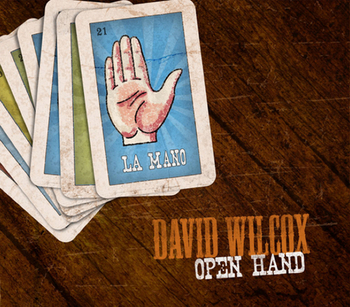
David Wilcox - Open Hand


[purchase]

“... If I spoke as loud as rolling thunder
Another war could start
So I speak in silent sacred wonder
Straight into the heart”
-from Vow of Silence

Although David Wilcox was talking about something else, I can’t think of a better description of his singing and his overall approach to making music. Wilcox is a master of subtlety who gives each song exactly what it needs. And his work has all the more emotional resonance because of this.

Open Hand, after all these years, is Wilcox’ first album on his own label. So it sounds just the way he wants. There is a contrast between the slower, mostly acoustic numbers, and the up tempo numbers, which tend to have arrangements that are closer to rock. But, throughout, Wilcox’ acoustic guitar is the featured instrument. He uses a variety of tunings, and the guitar usually sets up the rhythm of the song as well. He is not flashy, but Wilcox can get a full range of moods from his playing. Wilcox is supported by electric or stand-up bass, drums on some tracks, and mostly subtle electric guitar and keyboard parts. That strange sound you here on the chorus of Modern World is a musical saw.

Wilcox has a very smooth singing voice, which he is able to modulate to serve the song. So while he sings most of the songs here in the high end of his vocal range, (but without ever forcing it), for How Long he uses the lower end of his range to powerful effect. And, while most of the vocals use what singers call a head voice, what tends to kind of float, for Captain Wanker, Wilcox uses his chest voice, which produces a deeper, more grounded effect.

Open Hand is collection of songs which express a tension between hope and despair. Most of the darkest songs here include at least a faint ray of hope. And most of the brightest songs convey a sense of fragility, a sense that this could all be gone in an instant. And, as the brief example above shows, Wilcox is a poet. He is able to come up with bizarre metaphors, and get them to sound completely normal. In Outside Door, Wilcox places his character in an abandoned movie theater, where, for the character alone, the same movie plays over and over. This represents the fact that the character is emotionally stuck, but he finds an exit in the end, and rejoins the world. In Not From Here, Wilcox portrays a woman whose innocence and ability to see the world with fresh eyes makes her seem unearthly to the man who loves her; in the song, he characterizes her as actually being from another planet. This may not sound like a promising idea for a song, but Wilcox is able to turn it into one of the most beautiful love songs I have ever heard.

Wilcox also addresses the state of the world in a few places. He avoids stridency by personalizing his statements: he uses the viewpoint of a man in the Carolinas to talk about the economy in Dream Again, and creates a conversation between his narrator and Jesus to comment on religious hypocrisy in Beyond Belief.

Only one song misses the mark for me: Captain Wanker is just too self-pitying. But David Wilcox has set the bar quite high with his body of previous work, and that is what makes his rare misses so disappointing. Over all, if this is what Wilcox sounds like when he has complete artistic control, I look forward to hearing more.

David Wilcox: Not From Here

David Wilcox: Outside Door