
Saturday, March 10, 2012

Songs From the Spirit


Spirituality as often at its best when it happens by accident. Think about the zealotry of people who find religion as adults compared to the attitude of those who are born to it. I use a broad definition of spirituality, not confined at all to religious belief, but I find that this idea still holds true. So I was happy that this post happened by accident. I originally set out to do a post of hot new releases, but, as I began to choose songs, I noticed a theme developing. The songs were expressing deep emotions, sometimes triggered by a confluence of events. I had a theme on my hands, and two of the albums I had chosen at first fell away, to be replaced by two older albums. The selection of songs brought into focus for me what I mean by spirituality. Let me show you what I mean.
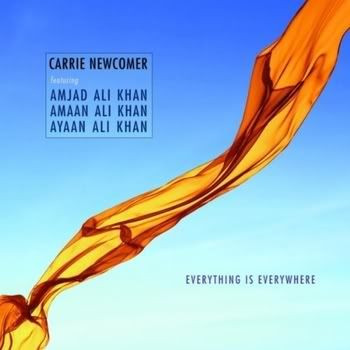

Carrie Newcomer: I Believe

[purchase]

Carrie Newcomer has incorporated spiritual themes, in the way most people use the term, into her songwriting for some time now. She has the gift of being able to frankly discuss this without ever getting preachy. These spiritual themes are even more in the foreground than usual on Newcomer’s new album, Everything is Everywhere. The album is the result of a trip to India Newcomer was able to make, and the chance to work with Indian musicians has made the music sound richer. Given all of this, I Believe, despite the title, might not be the most obvious choice. The song is largely a list of things in the mundane world. For me, that is exactly the point. The song is a wonderful expression of thankfulness for the every day miracles we all too easily overlook, and it is also a beautiful statement of humility in the face of this.


Dave Carter and Tracy Grammer: Till We Have Faces

[purchase]

Yes, there is a new album by Dave Carter and Tracy Grammer, and a very fine one. Carter passed on in 2002, but he was a prolific songwriter, and he left behind many songs that had never seen the light of day in his lifetime. In this case, Tracy Grammer discovered some recordings they had made together that she had thought were lost. Carter was the songwriter for the pair, and one of the best. He alternated between spiritual and earthly themes in his writing. Carter’s spirituality was not tethered to any specific religion, which freed him to write lines like “Rock me Goddess in the gentle arms of Eden”. Nor were his beliefs in any way a hodgepodge; rather, he found common ground in a wide variety of spiritual traditions, and he expressed that beautifully in his writing. Till We Have Faces is one of his finest songs of this sort. The song could be a mysterious telling of earthly love, or it could be a description of a ritual binding of body and spirit. It’s probably both. It’s the kind of song that prompts the listener to explore their own spirituality, which is exactly what the best writing of this sort should do. Grammer’s vocals and fiddle work here are also just beautiful. The background vocals are by Claire Bard, who I need to learn more about.


Kyle Alden: The Cap and Bells

[purchase]

Kyle Alden found his spirit moved by the works of another artist in another time: William Butler Yeats. On a trip to Ireland, Alden visited sites associated with Yeats, and Alden decided to revisit Yeats’ poetry when he got home. Alden says that the music to The Cap and Bells wrote itself, and the rest of the songs here quickly followed. Yeats expressed a spirituality that was very much tied to the physical world. Nature and the lore of specific places were important to him. If you believe that magic can be tied to specific places, Alden appears to have absorbed some of that magic. His musical settings are not Irish music, but they more than do justice to their inspirations.
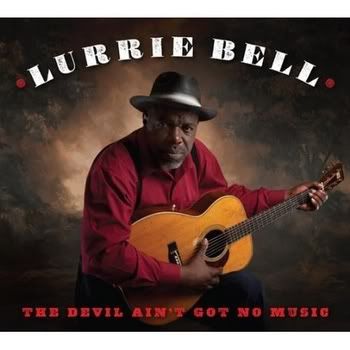

Lurrie Bell: Peace in the Valley

[Available April 17, 2012, pre-order here]

In making connections to spirituality as most people think of it, Lurrie Bell’s rendition of Peace in the Valley would appear to be the easiest fit. The song is, after all, a gospel standard, so what more is there to say? Quite a bit, it turns out. Bell grew up in the American south at a time when musicians had a stark choice to make between playing the blues or gospel. Blues was viewed as the Devil’s music, and this was taken quite seriously. Bell, of course, moved to Chicago, and made a name for himself as one of the best blues artists in a blues town. His blues often features his electric guitar and a good-sized band. But, before Bell left the south, he played gospel. The Devil Ain’t Got No Music is a statement by a man who is beginning to feel his own mortality, an affirmation of faith and a testimony. Stylistically, Bell can not keep the blues out of his gospel music, but the arrangements are stripped down, and the playing is mostly acoustic, although with a sharp edge. This is the sound of a man baring his soul, and Peace in the Valley is a fine example of the music’s power.
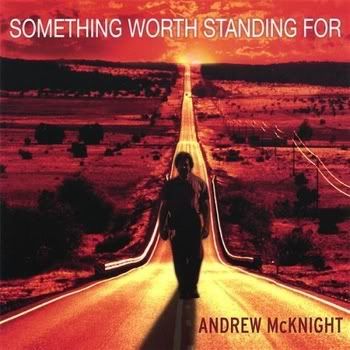

Andrew McKnight: Bridges

[purchase]

Most people would probably talk about their spirituality in terms of their inner life, and we have seen some fine examples of that. But for Andrew McKnight in 2007, his spirituality was all about how he related to the world outside. His political views are informed by his conscience and beliefs, which makes the political songs on Something Worth Standing For some of the best I have heard. Bridges goes deeper, and explains the trigger for all of this. The song was inspired by the birth of McKnight’s first child, and, in it, he meditates on the sort of world this child will grow up in. Surely, his determination to make that world the best place he can for that child is as much a spiritual statement as anything we have heard here.
Tuesday, February 2, 2010

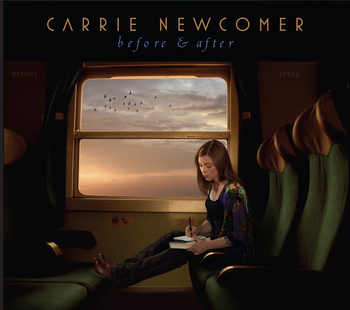
Carrie Newcomer - Before & After


[purchase]

There is an instrument which, in English, is called a talking drum. Among the Yoruba people of Nigeria, it is believed that a master player can give a talking drum an actual voice. On Before & After, Carrie Newcomer gets a similar effect in places from the entire band. It’s a remarkable sound. It is a voice and a pulse combined, and it is what a heart would sound like if it could talk.

Newcomer sings in a warm alto, mostly quiet or quieter. She is able to get the emotion of her work across without having to raise her voice, and she is a master of subtlety. She can be sweet or tender, but she can also be strong in her beliefs, but never strident.

Her band supports her with an appropriately light touch, but they vary the textures just enough to make this an interesting listen. There is wonderful string work, from violin, viola, or cello, but never all of them at once. There is a basic band of drums or percussion, bass, keyboards, and acoustic guitar, with some electric guitar added in for color. But the sound is mostly acoustic. Newcomer doesn’t usually need much help here on vocals, but she sometimes likes to blend with another singer on the chorus. So Krista Detor, Michael White, coproducer David Weber, and Mary Chapin Carpenter each take a turn. And she gets a gospel effect on one song, and something that reminds me of Paul Simon’s Graceland album on another, by using chorused background vocals.

Newcomer does a good job of presenting varied subjects in the songs here. There is one love song, of course, and it’s a good one. Hush presents love at the point where one person instinctively knows what the other needs. The song is wonderfully tender. There are a variety of songs about finding your way through life. Before and After is about coming to terms with a pivot point in your life, a time when something happens that changes you ever after. But Newcomer is interested here in what happens once you have had time to digest the experience. There are other times when you have an experience that seems significant, but you can never quite put your finger on why; I Do Not Know Its Name details a string of these, and they seem to add up. This is one of those moments I mentioned earlier, where the band becomes one percussive voice. Coy Dogs are half dog and half coyote; Newcomer uses their split nature as a metaphor for times when our wild and tame urges are in conflict. The musical setting makes this tension palpable. Then there is the sweet nostalgic feel of I Wish I May, I Wish I Might, which is about state fairs in Indiana. And the album concludes with a “bonus track”, A Crash of Rhinoceros. Newcomer should include this one if she is ever asked to do a children’s concert, and I mean that as a compliment. This one has a wonderful sense of whimsy, as it tells of Adam and (mostly) Eve naming the animals.

Special mention should be made of the song Do No Harm. Back in 2007, Newcomer was involved in a project called Wilderness Plots. The short stories of Scott Russell Sanders were adapted into a stage work which featured new songs by Newcomer and several other Indiana-based songwriters. The stories concerned the settling of the Ohio Valley. The Wilderness Plots project resulted in a stage show, an album of the songs, and there was even a PBS version shown on local TV stations. For Do No Harm, Newcomer has returned to the stories of Scott Russell Sanders, to tell a harrowing tale of the arrival of Quakers in the region. This seems to me to be the most heartfelt song on the album.

So Before & After is a set of beautifully arranged and realized songs. Newcomer explores an impressive range of subjects, and nails it every time. This one comes out on February 23. Make sure to grab it when it does.

Carrie Newcomer: I Do Not Know Its Name

Carrie Newcomer: Coy Dogs

Friday, January 15, 2010

Stories From the Back of the Drawer


I have a ritual I perform every week. The new theme is announced for Star Maker Machine, and I go scrambling through my CD collection for usable song. Every week, some albums don’t make the cut, and some never do. These are good albums, but they just don’t have the song I need that week. Or, I find what I need sooner, and these albums never see the light of day that week. These albums get shunted to “the back of the drawer”, so to speak. But many weeks, these albums say, “please post from me.”

The other thing is that I don’t get to listen to these albums much. I know I like them, but after a while I for get why. So this week, I chose five of these albums, and here they are. I did some research, to remind myself of why I got them. And it turns out that these albums have some great stories that go with them.

Carrie Newcomer: My Father‘s Only Son

[purchase]

This is the simplest of the stories. Carrie Newcomer is still going strong, and she’s fairly well known on the folk circuit. Her music, I gather, is mostly acoustic, and she particularly wins praise for her songwriting.

But in 1996, Newcomer was on the Philo label. Philo was, (is?), an imprint of Rounder, and well known folk label. And I hesitate to generalize based on two albums, (the other comes later in this post), but, on that evidence, it appears that Philo was trying to crack the pop market with folk-rock releases. So the album My Father’s Only Son may not be the best representation of Newcomer’s music. But the title track is another matter. Things quiet down here, and Newcomer’s songwriting shines through. One of two daughters, the narrator here takes the role of the son her father never had, and describes their days together fishing. Eventually, the peace on the fishing pond is broken by an event that unmistakably establishes this “son” as female. The song is beautiful and tender.

disappear fear: Fix My Life

[purchase]

The other Philo band was disappear fear. That’s not a misprint; the band always wrote their name in lower-case letters. disappear fear was a duo of Sonia Rutstein and Cindy Frank, plus their backing musicians. They were clearly modeled after Indigo Girls, who gave their blessing by appearing on three songs on this album. Sonia Rutstein did all of the songwriting, and arranged all of the covers. In time, Sonia Rutstein dropped her last name, and she now records as Sonia. Cindy Frank is still providing background vocals, but they are no longer billed as a band.

Sonia has certainly expanded her musical horizons. For her most recent album, she composed songs in Spanish, Hebrew, Arabic, and English, and provided musical backdrops to match. She has also become a painter, and did the artwork for this same album.

Kate Wolf: Secrets Aside

[purchase]

And now we come to Kate Wolf. I heard of a renowned folk singer who died young. I heard from people I trusted that I would love her music. So I kept my eye out, and about ten years or so ago, I found the album Daisy Petals on My Head. Now maybe you are familiar with Kate Wolf’s career, and you know how this ends. But I didn’t. I grabbed the album, and, just as my friends had said, I loved it. Wolf showed a talent for mixing up musical styles without sounding aimless. The album hangs together nicely, but has a rich variety of sounds.

But there is a punch line. As I said, I researched this post so I could speak knowledgeably about the artists. I looked up the renowned folk singer Kate Wolf who died young. Yes I had that right. But on her website was a note, saying that the album Daisy Petals on My Head was by a different Kate Wolf. So fifteen years after its release, and at least ten after I got it, I just found out that this is the wrong Kate Wolf! But I still really like the album. So I tried to find out more about this Kate Wolf, and came up empty. Did she change her name, at least for recording purposes, after this album? Was the outcry from fans of the “real” Kate Wolf to much for her? I have no idea. So, if anyone does know, please tell us about it in the comments. Thanks.

The New St George: All the Tea in India

[purchase]

The New St George put out a wonderful album called High Tea. I remember reading about them in Dirty Linen. They were a half-American half-English band. They played the style of British folk-rock pioneered by Fairport Convention and Steeleye Span. And the came out of the Washington DC folk scene, and stood on the doorstep of wider fame. And then, I never heard of them again.

So what happened? It’s practically a cliche that someone at the major label champions a band, and then leaves the company before he can promote them. There was that. But there was also incredible bad luck. People looked for the album and couldn’t find it, because it was filed under High Tea, not The New St George. That was caused by a printing error on the spine of the CD cover, and my copy has it. The band was going to get a major boost from a two page spread in a major catalog, but when it appeared it featured a picture of Ian and Sylvia. You can’t make this stuff up. Finally, it got to be too much, and the band broke up. Supposedly, they recorded most of a second album, but it never saw the light of day.

But High Tea stands as a document of a very talented band. All the Tea in India tells of the British occupation of India from the Indian point of view, and it is a wonderfully heartfelt song.

Girls From Mars: Stompin‘ at the Savoy

[purchase]

Finally, here is Girls From Mars. I know exactly how this one happened. My wife and I went into a Borders one Friday night, and Girls From Mars were playing in the cafe. We loved what we heard, and bought the CD as soon as they went on break. We also bought another CD that they were selling, by a band called Beats Walkin’. That one was wonderful Western swing. And as far as I can tell, these were the only albums either group ever released.

No, this wasn’t some great cosmic conspiracy, (see above). From what I can tell, they only ever meant to release one album each, and both groups are still active. The two groups have several members in common, and I believe the albums were done to promote swing dance and western dance workshops in the Philadelphia area. These workshops have since found their way to Augusta, so I guess it worked. Meanwhile, I am quite happy to have the albums for the sheer pleasure of listening to them.
