Saturday, April 24, 2010

For a Song: Pull Out the Pin


Kate Bush: Pull Out the Pin

[purchase]

What? Another For a Song post? Where’s the theme post this week? All good questions. After a year and a half of living elsewhere, this week my family and I are finally moving back into our own home. Why is a very long story, but suffice it to say that this is a great relief. However, the move is also a lot of work and very stressful. So I simply don’t have the time and energy to do a full theme post right now, as things related to the move come to a head. Still, I wanted my readers to have something to carry you into the weekend. And I wanted to continue my theme of music that defies categorization. The theme post is still to follow.

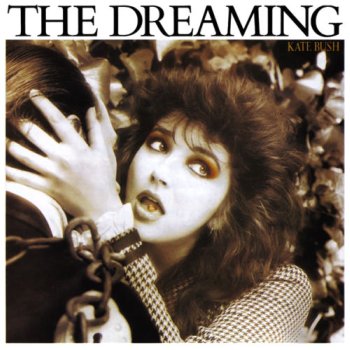
Actually, much as I love the music of Jane Siberry, I had originally planned to post Kate Bush last time, from her amazing album The Dreaming. But I only got that album unpacked today. Here are songs which show a knowledge of English dance hall songs, and also of the Australian Aboriginal dreamtime. Other songs, like Pull Out the Pin, do not have obvious precedents from anywhere. And this is quite a change from the chanteuse who had a British hit not long before with Wuthering Heights. Wuthering was a lush ballad, with soaring strings and a highly emotional vocal. But then Kate Bush met Peter Gabriel, and her musical imagination was unleashed. Pull Out the Pin could have been a lush piano ballad, with a Wuthering Heights type of arrangement and vocal. The piano part is there, but the rest is something else. The odd percussion creates a dramatic tension, while Bush’s vocal is intense but not overwrought. Other songs on The Dreaming express emotional anguish, and the power of Bush’s voice comes to the for in such numbers. But where those songs burn and flame out, Pull Out the Pin smolders with an emotionalism that does not burn out by song’s end.

The lyric here seems to describe a relationship in terms of predator and prey, and it’s not clear which is which. There are also vague suggestions that this may be a werewolf tale. Or it may all be just a metaphor. Either way, it’s powerful stuff.

One last thing to say about this song: there are performances by two notable guest musicians on this track. Bassist Danny Thompson first become known to me as a member of Pentangle. And the male vocals on the chorus are by David Gilmour, best known for his work with Pink Floyd.


Saturday, February 6, 2010

The Night Sky


I grew up and still live in New Jersey. Our air is not the cleanest, so I never had a view like this of the night sky. Nevertheless, I was always inspired by what I saw. I wanted to be an astronaut, and explore the sky. This was the great adventure of my youth, when we as a country had yet to reach the moon. As I got older, I found out that, to be an astronaut, you had to be in the Air Force, and that was out of the question for me. So I moved on to other dreams. But the awe that the night sky inspired has never left me. And I can see now that I am not alone. Here then is a set of songs inspired by that sense of awe.

Tasmin Archer: Sleeping Satellite

[purchase]

Remember this one? Tasmin Archer had a hit with Sleeping Satellite in 1993. But now, she is all but forgotten. She did another album in 1996, and then not again until 2006, so it’s not all that surprising. But this one is definitely worth another listen. Archer equates the awe of the night sky with the rush of emotion that comes with a new love. Here, she has reached the point where she wonders if it all happened to fast. Musically, this one reminds me in all the right ways of the music Seal was making at the time. But lyrically, this one belongs to Archer alone.

Kate Bush: Constellation of the Heart

[purchase]

In olden days, sailors navigated by the stars. Kate Bush turns that inward, and proposes to navigate through love in the same way. Musically, this sounds to me as if it could have been produced by George Clinton. It’s a surprising sound for Bush, but she makes it work. And this one really cooks.

Afro Celt Sound System: Dark Moon, High Tide

[purchase]

I couldn’t resist including this one. Afro Celt Sound System began with the concept of finding common ground between Celtic and African music. Later, they would add other influences, but here is the original idea in its pure form. Electronics are used to smooth the rough edges, but are not intrusive. Dark Moon, High Tide is a fine example of their art.

Mary Chapin Carpenter: Ideas Are Like Stars

[purchase]

It seems to me that Mary Chapin Carpenter has created a character here who has what is known as “high-functioning autism”, or Asperger’s Syndrome. That may be a reach on my part, but the description of Joseph here fits. His life is lonely because he is “odd”. He forms a waitress’s name with coins he leaves her for a tip. And he can spend the entire night just watching the night sky. I applaud Carpenter for this spot-on and wonderfully sympathetic portrait.

Having said that, I would love to know the actual background for this song. It feels like it was based on a real person. If anyone has more information, please share it in the comments.

Emmylou Harris: Jupiter Rising

[purchase]

As night falls, and the stars come into view one by one, Emmylou Harris sings of a hoped for new love. Once there are enough stars visible, pictures form in the sky, and the resolution of this hoped-for romance will become clearer. Harris does not state any of this in her lyric, but, to my ears, it is strongly implied. Maybe I should write the resulting lyric, and send it to her. But I prefer to just listen to Jupiter Rising, and let my imagination wander. In a way, all of these reactions to the beauty of the night sky are about imagination.

Saturday, November 28, 2009

What I Like


I know I said that the review last weekend would be my 100th post. But I realized that, if you don’t include my announcements, and instead count only those posts which include music, I was early. As nearly as I can tell, this is actually my 100th post by that count. So, in honor of the occasion, I wanted to deal with a question I sometimes get asked.

We bloggers hear from artists and their managers, agents, and promoters all the time. They always have the perfect band for your blog. And sometimes it works. But, all too often, it doesn’t. The ones I have the most respect for are those who have listened to some of what I post, and only contacted me afterwards. But I also really appreciate the ones who ask me what kind of music I like. Unfortunately, that is not an easy question for me to answer, because I have varied tastes, and I won’t rule out for this blog anything that catches my ear. So, for my 100th music post, I thought I would attempt to give some guidance to artists and their representatives.

Joni Mitchell: Harry‘s House - Centerpiece

[purchase]

I know I just posted Joni Mitchell, but her music has to be part of this discussion. I value her for her evocative lyrics, and for her willingness to try new things musically. Harry’s House - Centerpiece also includes some fine jazz singing in the middle section. I would like to hear from jazz singers about possibly being featured here.

Dave Carter and Tracy Grammer: I Go Like the Raven

[purchase]

Here is another example of evocative lyrics. Dave Carter and Tracy Grammer also used spare arrangements for their songs, giving each song exactly what it needs. This is a hard quality to define, but one that I have mentioned in my reviews. I Go Like the Raven has a mystical/ spiritual subtext, which is a bonus for me. If your work evokes an unusual spiritual viewpoint, without being heavy-handed about it, I’d like to hear from you.

Steve Earle and the Del McCoury Band: Carrie Brown

[purchase]

A blast of bluegrass is always welcomed here. And it doesn’t get any better than the Del McCoury Band. I also appreciate Steve Earle stretching out. Earle is one of our most eloquent political songwriters. Much as I admire Joni Mitchell’s songwriting, I don’t think she is a very good political songwriter. Steve Earle is.

Kate Bush: The Sensual World

[purchase]

I like spare arrangements, but I also love it when and artist can create a rich aural soundscape. This kind of thing can really fall on its face when done badly, but Kate Bush can include Celtic influences and a Bulgarian folk choir in the same song, and make it work. Peter Gabriel is also a master of this. Talking Heads used the intricacies of African rhythms to powerful effect.

The Toasters: Weekend in LA

[purchase]

Finally, I want everyone to know that I love ska. I have featured some of it here, but I would like to do more. If you know of someone who is in a ska band, please steer them in my direction.

**********************************************************

So there are five songs that give some idea of what I like. I didn’t have space to talk about my love of acoustic blues and the classic Chicago sound. I didn’t get to any songs that show the influence of classical music. But I hope I have given people some ideas of what I would like to consider for inclusion here. I look forward to sharing the results with everyone, and, as always, I welcome your comments.

Thursday, June 18, 2009

For a Song: There Goes a Tenner


Kate Bush: There Goes a Tenner

[purchase]

Kate Bush burst onto the Brittish pop scene as a teenager, singing lush romantic ballads. She certainly had the voice for it. But, without knowing what it was, she wanted to do more musically. So. it wasn’t until Peter Gabriel asked her to sing the background vocals on Games Without Frontiers that her musical world opened up.

By the time Bush released The Dreaming, she was exploring the many different modes of expression she could get from her voice. On There Goes a Tenner, Bush’s vocals are subdued and nuanced; here she sings, where earlier in her career she might have belted. And the lyrics also reflect her expanding horizons. Not a love story by any means, There Goes a Tenner tells the tale of a bank job gone wrong. The small time robbers planning the job are full of themselves. The imagine themselves as stars of the old-time gangster movies, Humphrey Bogart and so on. But only Bush’s character is grounded enough to wonder whether something might go wrong. So, it’s an unusual subject for a song.

But what I love most about this song is the final image. Here is Bush’s character, having been knocked out, coming to lying in the street. And the first thing she notices are the small bills floating in the air. Later, she will have time to realize that she is being arrested, and is on her way to prison. But now, in that in-between state of neither unconsciousness and consciousness, those air born bills are just fascinating. And this is the moment Bush wanted to get to.