Sunday, June 26, 2011

Flavors of Folk


I am comfortable saying that all of the songs in this post are folk music. And yet, there are a variety of approaches to writing, arranging, and performing these songs. In part, this reflects changes in either what constitutes folk music, or my perception of it over the years. It comes down to the question of what folk music is. It almost seems that, with every new album I receive, the answer gets bigger. Folk music these days has more subgenres then there are posts in the president’s cabinet. So I can’t cover them all here. But this survey gives a brief overview of what folk music can be, and how my understanding of it has changed over the years. Let me show you what I mean.
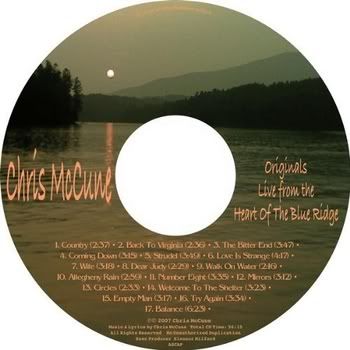

Chris McCune: The Bitter End

[purchase]

I originally thought that folk music was the sound of one man or one woman, and an acoustic guitar. The music was unadorned, not raw but true and unprocessed. Chris McCune makes his music that way. He sings in a gravel-y baritone, and his guitar playing is fine, but not the center of attention. The focus is on the songs, especially the words. McCune sounds weary of the world, but he varies his expressions of that with the poetry of his words. He also can get an amazing range of moods out of his guitar playing. So an entire album of one man and his guitar held my attention throughout. Not many artists can do that anymore.
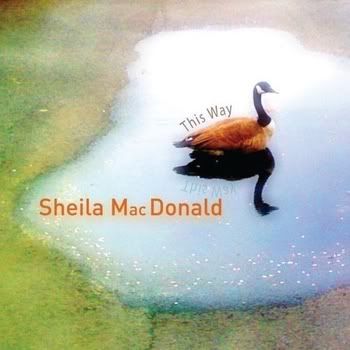

Sheila MacDonald: Lucky Luke

[purchase]

Sheila MacDonald has a pretty voice, but you can tell that she is not a trained singer. So, her songs don’t sound polished, but they do sound true. She varies the sound of her album by letting someone else handle some of the guitar playing, and by adding an extra instrument here and there. The fiddle on two songs is particularly beautiful. But Lucky Luke has just MacDonald’s voice and the guitar playing of Raymond Gonzalez. MacDonald adds overdubbed background vocals with a beautifully light touch. What comes through is a quality of innocent sympathy for the title character that would have been lost in a more polished performance. MacDonald has a perfect feel for how best to use her musical and writing gifts, and Lucky Luke is a perfect example.
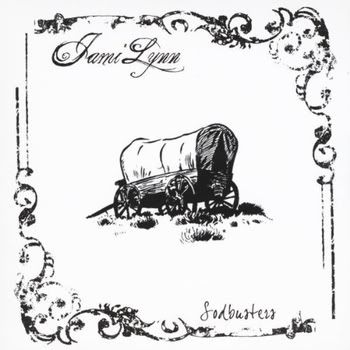

Jami Lynn: The Lame Soldier

[purchase]

As I continued to explore folk music, I began to understand that it could be played and sung not only by individuals, but also by groups. The music of the Kingston Trio is not what I would call folk, but the music of Doc and Merle Watson certainly was. On The Lame Soldier, Jami Lynn plays banjo, and she is joined by Josh Reick on guitar and stand-up bass for a wonderful trio sound. Another requirement for my earliest definition of folk music was that the songs had to be traditional. Half of the songs on Sodusters, including this one, are indeed traditional, but the other half are written by Jami Lynn. Throughout, the songs have the haunting sound that traditional songs so often have. As a songwriter, Lynn is so well versed in traditional music that her originals fit in perfectly on this album. Sodbusters is one I know I will want to come back to again and again.
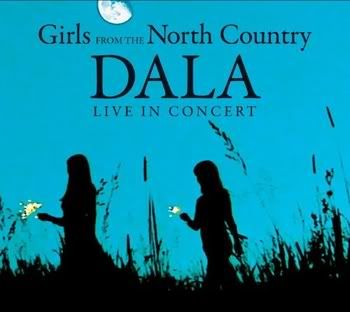

Dala: Anywhere Under the Moon

[purchase]

Based on their music, you might guess that all of the artists in this post so far listen only to folk music. You would not say that of Dala. They can do folk as well as anyone, and their music is acoustic. But songs like Anywhere Under the Moon have rock strumming. The woman in Dala have their ears wide open, and a variety of influences can be heard in their music. In their case, that diversity of influences makes their albums richly varied. Girls From the North Country is no exception. The album has a traditional song, as well as covers of Bob Dylan and Joni Mitchell, to name a few. But it also has original songs. For Dala, it is never about the genre, but simply about the song. All of the songs here are performed beautifully, with the wonderful vocal harmonies that are a key to the group’s sound.
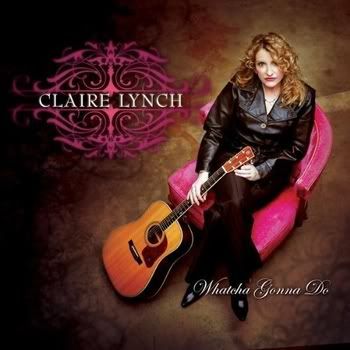

Claire Lynch: Whatcha Gonna Do

[purchase]

Ostensibly, the music of Claire Lynch is bluegrass. But there are hints of country and jazz as well. They call this kind of thing new grass these days. I just call it great stuff. Lynch has a voice that borders on Dolly Parton territory, with that wonderful sweetness. Whatcha Gonna Do, the song, is a fine example of how the diverse elements that make up Lynch’s music can combine to create great beauty.

Saturday, March 13, 2010

“Yeah, But…”


The title of this post is the shortest answer I can give to the question, “How do some artists approach cover songs?”. Surely, something drew them to the original song in the first place. But the new version is something else entirely. The song has been transformed so completely that it might as well be an entirely new song. Here is a set of covers like that. Purists may be offended. This set is for the rest of us.

Cassandra Wilson: I‘m So Lonesome I Could Cry

[purchase]

Cassandra Wilson takes Hank Williams’ classic I’m So Lonesome I Could Cry, and creates a setting for drums, bass, fiddle, and guitar. There is also a bouzouki, but it still sounds like it might be a fairly straightforward reading. It isn’t. Wilson turns the song into an aching jazz ballad. The lyrics are here, but even Williams’ original melody is gone. It might be best to call this a new musical setting of a poem by Hank Williams. But Cassandra Wilson completely gets the intent of the original. This version aches with loneliness just as much as the original.

Jaymz Bee & The Royal Jelly Orchestra: Fly Like an Eagle

[purchase]

On the evidence of this song, don’t let the name of the band fool you. This is a jazz band with some serious chops. Elizabeth Shepard takes the vocals, and the band swings hard. Fly Like an Eagle has always struck me as a celebration of freedom. This version represents that freedom in musical form.

Incidentally, I got this one from Fongolia at the blog Fong Songs. He presents unusual originals and covers by Canadian artists who are unknown here in the United States. I highly recommend a visit.

Save Ferris: Come On Eileen

[purchase]

Ska bands seem to play a game of Can You Top This. The rules are simple; find an unlikely candidate and create a ska cover of it. This could be a recipe for disaster, but a surprising number of the ones I have heard are quite good. This version of Come On Eileen is one of my favorites.

Dala: Ohio

[purchase from American Laundromat Records]

This version of Ohio comes from a compilation album of Neil Young songs performed by female artists. The album is on American Laundromat Records, where they specialize in compilation albums for various charities. This one helps breast cancer survivors.

Usually, artists choose to cover a Neil Young song from his solo career, but here is one from his days with Crosby Stills Nash and Young. The original rang out in protest of the deaths of the student demonstrators killed at Kent State. By extension, the song was also a rallying cry for the protests against the Vietnam War. The song expressed righteous anger, and demanded action. But here, Dala preserves the words and melody of the original, but changes the tone completely. The arrangement features tolling piano chords and acoustic instruments, and the song becomes an elegy for the dead. And the vocal harmonies of Amanda Walther and Sheila Carabine really put this one over. The transformation of the original is probably the most subtle example here, but just as complete.

Spotlight Song of the Week:


Dala: Compass

[purchase]

Speaking of Dala, I am pleased to present them here with this week’s Spotlight Song. I have to admit though, this one almost didn’t happen. The album is called Everyone is Someone, and that first thing I heard was the single, Levi Blues. Here is a folk-pop number with breathy girlish vocals, and was ready to dismiss both it and them. However, in due time I got the Neil Young sampler with Ohio on it. I played this one straight through, and Dala’s version of Ohio made me think I might have missed something. I did, but luckily, there was still time to fix it.

I still find Levi Blues to be lightweight, but the rest of the album shines. In particular, Walther and Carabine’s vocal harmonies put me in mind of Simon and Garfunkle, and they get a lot of emotion not only from their individual voices, but also from the way they blend and interact. The lyrics are wonderfully poetic, and feature great imagery.

Compass is a bonus. All of the qualities I mentioned above are here. And the arrangement here is stunning. It’s just two acoustic guitars and a harp, plus those voices. Many Celtic artists have achieved less emotional impact with fuller arrangements. They should all listen to this, and see how it’s done.
