Tuesday, August 17, 2010

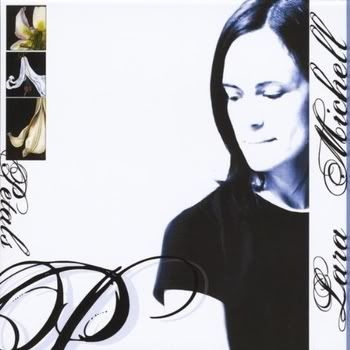
Lara Michell - Petals


[purchase]

I can tell you that I first heard Lara Michell singing as a member of the Stolen Sweets, and it’s true. But it isn’t very helpful. Petals is something else entirely. It might be tempting to call this a folk album; after all, most of the tracks feature two acoustic guitars and vocals, and not much else. But this too is misleading. The first song on the album features keyboards, and has a beautiful trumpet part. The last song features the guitars, but has drums and bass, and also includes cello and flute. In between, the arrangements are more spare, with twin acoustic guitars featured in most of the arrangements. . Michell is a writer who needs few words, and never wastes the ones she uses. The songs do build and then pull back, but they are not overly adorned. There are three background singers here, all female, and they all sing in a low soprano. What is remarkable is how well the voices blend, becoming one instrument. Put the whole thing together, and you have an album of beautiful, atmospheric music. But Michell never loses track of the emotional part, and the songs ring true.

Petals opens with The Bluest Clown. This is a song that comes from a dark place. Its narrator is in despair, following either a painful breakup or the death of a lover. The rest of the album offers varying degrees of healing, but the pain never entirely goes away, and the future holds many potential relationships that are approached with extreme caution. A Fleeting Lucid Moment offers a bit of a reprieve; here is a relationship that seems to be working, although there is still some caution on the part of the narrator. The song opens with just a nylon stringed acoustic guitar and solo vocals. On the first chorus, we hear background vocals for the first time. Then the second verse arrives, and a steel stringed acoustic guitar joins in, with a part that seems to echo the first guitar. This creates a musical statement that two are joined as one, but there is also a musical tension between the two parts. All of this is very subtle, and it registers emotionally, even if the listener is not consciously aware of how the effect is achieved. And subtlety is the key to how this album works. There no outbursts here, but the album as a whole paints a detailed picture of heartbreak. And yet, it never becomes depressing, because Michell’s narrators always have hope.

In the End It’s Over starts folk-like, with just vocal and strummed guitar, but the other guitar joins in, and then bass and drums, and soon we have a breezy pop song. It comes as a breath of fresh air towards the end of the album, providing a lightening of the mood at the perfect time. The album ends with The Chauffeur, a Duran Duran cover. It is much wordier than Michell’s own songs, and it is the longest song on the album, but the style of the performance fit’s the album perfectly. And the middle somewhere, there is a beautiful song called The Girl in the Garden; this one features a call-and-response between Michell and her background singers that shows just how well Michell knows how to make use of the human voice. Overall then, Petals is a work of subtle beauty and great intelligence, all in service of the song, and all emotionally true. I have now heard Michell in two very different musical contexts, and I can’t wait to hear what she does next. (Actually, I expect to have that here soon, but more on that when it happens.)

Lara Michell: A Fleeting Lucid Moment

Lara Michell: In the End It‘s Over

Saturday, August 14, 2010

Anything Can Happen


For artists and their representatives, the question is, “Would my music fit on your blog?” Ultimately, the not very helpful answer is, “Yes, if I like it.” Beyond that, I suppose I could offer up a list of musical genres I like. But some of my favorite music doesn’t neatly fit in existing categories. I like artists who are adventurous, who chafe at musical boundaries. And I like artists who, within accepted boundaries, do the unexpected. My only requirement in such cases is that it must all serve the song. Let me give you some examples.


The Winterlings: The Postman

[purchase]

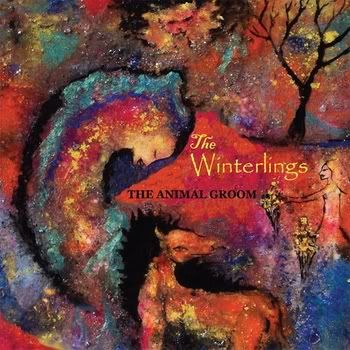
For The Winterlings, folk music is just a starting point. They are the duo of Wolff Bowden and Amanda Birdsall. Both play guitar, and they play six other instruments between them on the album The Animal Groom. There are additional musicians who further expand the musical pallette. The result is an album of richly varied arrangements. Bowden sings in a folk tenor, while Birdsall presents a bluesy country soprano. Their voices shouldn’t blend, but they do. The pair cowrote all of the songs here, and they are rich in nature imagery, especially about the weather. Many of the songs come from a dark place, but also a very rich one. The album art is by Wolff Bowden, and like the music, it is the work of an artist whose goes where the muse wishes to take him. The result is dreamlike at times, and endlessly fascinating.


Tin Pan: Dandelion

[purchase]

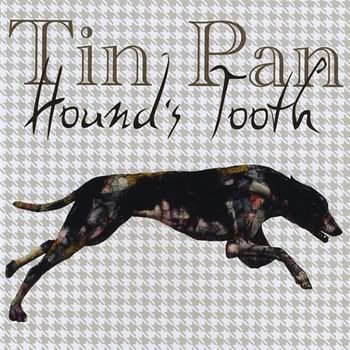
For this band’s purposes, the term Tin Pan Alley refers to an area in New York City that had a high concentration of music publishers from roughly 1900 through the end of The Depression. More broadly, the term refers to the music that was made there. This was the popular songs of the day. Some of those are on the album Hound’s Tooth by the band Tin Pan. And alongside them are original songs by bandleader Jesse Selengut that fit right in.

Selengut plays trumpet, flugelhorn, and guitar, and handles lead vocals. Stefan Zeniuk plays tenor sax and clarinet, another member plays all manner of guitars, and the lineup is completed by the bass player. There is no drummer. Selengut’s vocals have a rough quality that gives this music a bluesy quality. Overall, this has the quality of street music, coarse but undeniably powerful. And I don’t mean to suggest any lack of talent; quite the opposite is true. This is a band that achieves its affects with great skill, and with a subtlety that belies the listener’s first impression. This is one that I am sure will reward repeated listening.


Guthrie Kennard: God of Abraham

[purchase]

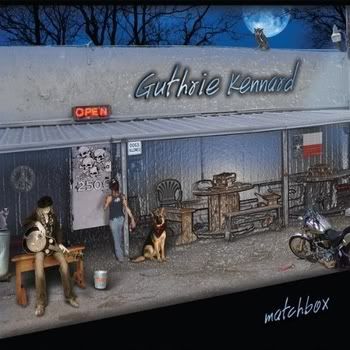
Guthrie Kennard comes under the Americana category, on the bluesy side. The album Matchbox was produced by Ray Wylie Hubbard, and it’s easy to see why he took an interest. Kennard has a voice like a rusty knife, and he writes and sings haunted tales of the heartland. The arrangements are spare, but all of the feeling comes through. And Kennard creates grooves that will stay in your head for a while.


Rachelle Garniez: Blue Blue Grass of Home

[purchase]

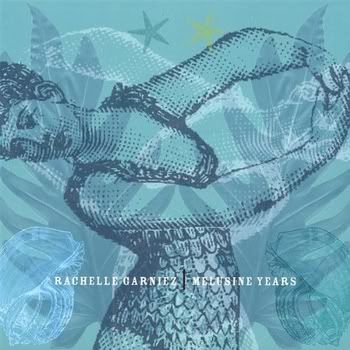
I found Rachelle Garniez when I reviewed jazz singer Catherine Russell’s latest album. But that didn’t prepare me for Garniez’ work under her own name. If you must have a category, call this post-cabaret. Garniez sings in mostly in a rich alto, but she can interject bursts of almost operatic soprano at times. She has a playful side in the way she does this. There are only three musicians on the album, but they play multiple instruments, so the texture is rich and varied. Usually, the featured instrument is Garniez’ piano. The songs feature characters who exist outside of society’s norms. These characters don’t seem dangerous, just odd. Garniez likes them, and she gets the listener to do the same. If Garniez and Tom Waits ever got together to perform each other’s songs, I would love to be there. I can think of very few artists that I would put on that stage, but Garniez shows here that she could more than hold her own.


Lisa Engelken: Caravan

[purchase]

Lisa Engelken is another of those fine jazz singers I keep getting lucky to find. And there is no question that she stays well within that musical category. But she still shows a wonderful musical imagination. She takes Billy Idol’s White Wedding, and turns it into a beautiful jazz ballad, and it works. What she does with Duke Ellington’s song Caravan is more subtle, but just as impressive. Ellington’s original version featured a strong exotic beat and the rich harmonies for which he was known. Most covers of the song retain these qualities, but Engelken strips the song down. The rhythm is only suggested, and most of the richness of Ellington’s original charts is gone. This spare arrangement means that Engelken has no place to hide, and her singing must carry the day. She is more than up to the task. Her voice is a smooth purr, but she can express a full range of emotions with it. On the album, she also shows a gift for scat singing. Engelken may be clearly a jazz singer, but she is still not afraid to take chances, and she makes them pay off.

Thursday, August 12, 2010

For a Song: As Cool As I Am


Dar Williams: As Cool As I Am

[purchase]


I thought, “Dar Williams is a folk sort of artist. Her songs are quiet, with mostly acoustic arrangements.” And then Mortal City came out, and our local college radio station started playing As Cool As I Am. This song is a rocker. Actually, if you take it apart, the instruments are still mostly acoustic. It even has the Nields on background vocals. But there are a bass harmonica and a digeridoo which combine to play a rockin’ riff, which is the first thing that catches your attention. It just goes to show that a song can be rock, even without plugging anything in.

The lyrics are another matter. I hear many songs where the intention of the writer is unclear. Some of my favorites do this, leaving the song open to multiple interpretations. Other times, there are songwriters whose lyrics are opaque because they are just not very good. But there are also times when the listener rebels against what the songwriter is saying. “That can’t mean what I think it means, can it?” Yes it can. The chorus of As Cool As I Am has the line, “I will not be afraid of women”. What’s that about? Finally, it dawned on me. The narrator of the song is describing a relationship by relating the events of a series of visits to a lesbian bar. From the sound of it, I would say that, at the beginning of the song, the narrator has never been to one of these places before. Possibly, she has tried to be straight until now. By the end of the song, the relationship has ended, probably badly, but still, “I will not be afraid of women”. She may not have found her lover, but she has found herself. And everything else must come after that.

Tuesday, August 10, 2010

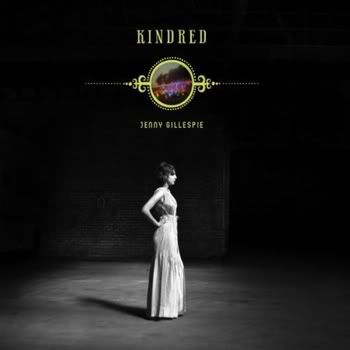
Jenny Gillespie - Kindred


[purchase]

On Kindred, Jenny Gillespie achieves something rare. The songs have synthesizers and programmed sounds, and Gillespie’s piano and guitar parts are often processed, along with the drums when used. But there are also parts here for cello, clarinet, trumpet, and flute, and these sounds are left alone. The rare thing is that Gillespie and her producer Darwin Smith not only attempt this mix, but they make it work. The resulting music sound spare in some places, and lush in others, and it always serves the song, and the moment in the song.

One remarkable example of how this works is the song In the Garden. Using a combination of synthesizers and processed sounds, Gillespie and Co set up a groove for her to sing over. It seems like the song will be that simple, and it sounds fine. But then, part way through, the listener realizes that there are hand claps in the mix. That wasn’t there before! Little details like this accumulate as the song progresses, and the arrangement at the end of the song is completely different from how it started. Now there are drums, electric guitar, and even synthesizer parts that weren’t there before. The important thing is that this not just for show; the affect is to increase the intensity of the song as it goes along, and this perfectly suits what is happening in the song emotionally.

Things are usually not that straightforward though. Usually, the songs have subtle shifts in texture to achieve their emotional effects, but these shifts do not happen in a straight line. And the synthetic sounds do not always dominate the mix; sometimes the more traditional, or what I would call organic, instruments dominate the mix, while the synthetic sounds are added for flavor and texture. Over it all, Gillespie sings in a breathy high soprano, sometimes harmonizing or singing countermelodies with herself in overdubbed vocal parts. Breathy voices sometimes have a limited emotional range, but not so here. Gillespie carries the load of conveying the emotions of these songs beautifully, and the whole thing works for that reason.

The lyrics are allusive, rather than direct. The combined effect of the musical arrangements and the lyrics gives the listener a template to use to fill in the details of what the songs are about. So my discussion of the lyrics may surprise Jenny Gillespie, and may not be what you hear in them either. Much is left to the listener, and this sort of thing must be done well, or it falls apart completely. It is done very well here. I am drawn most to the songs that feature the organic instruments, and I have chosen two of these to post. Swimming in Amber has an arrangement built around the acoustic guitar, and this is a breakup song. Gillespie’s vocal here conveys sorrow and loneliness, but also love remembered during the flashback sections. Merged Furs, on the other hand, takes place at the beginning of a relationship, and finds Gillespie determined to make this work, but also a bit anxious. Throughout, Gillespie’s words and her vocals present emotions as complicated; these are songs about adult relationships, not simple crushes. In Gillespie’s world, emotional states are often reflected in the world around her, so nature images abound. Secret Passageway has “a deer who’s nibbled on glass”, while Dance or Disappear has a tidal pool with rocks jutting from it as the tide goes out. It’s hardly surprising that the only song on Kindred that Jenny Gillespie did not write is called In the Garden.

So each lyric is a poem to be pondered, with meanings that might well change as the reader goes through life. And the musical arrangements enhance this beautifully. I don’t think Gillespie could duplicate the sound of Kindred when she performs these songs live, but the songs are strong enough that I would still want hear them. And Gillespie displays a musical imagination that I’m sure would be up to the task.

Jenny Gillespie: Swimming in Amber

Jenny Gillespie: Merged Furs

Saturday, August 7, 2010

Fairy Tales


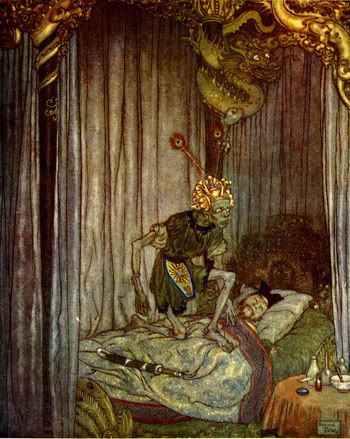
I confess, I love fairy tales. But, I hasten to add, I’m not talking about the sanitized and prettified Disney versions. Yes, the Disney movies are examples of great animation, but they are certainly not true tellings of the tales. The urge to make these tales “safe for children” is certainly not limited to Disney, but they are the best known offenders. The fairy tales as I love them are both richer and stranger than the best known versions. There is a darkness to them, and endings are not so purely happy. Evil stepmothers are made to dance in iron shoes that just came out of a furnace. Hansel and Gretel may go to a better place, but the tale does not forgive the parents for abandoning them. And some of the episodes along the way are genuinely frightening.

So what does all of this have to do with music? Songwriters have long been inspired to include allusions to fairy tales in their lyrics. Some songs are tellings of classic tales, often from a fresh perspective. And some songs put me in mind of a fairy tale, even though the songwriter may not have even known the tale I had in mind. All of this happens because fairy tales and songs have one thing in common: they address feelings and situations found in real life. Let me show you what I mean.

Emilie Autumn: Shalott

[purchase]

Emilie Autumn is a gothic songwriter and performer. Both her music and her words evoke strong emotions, and convey an air of mystery. So fairy tales are perfect material for her. The title Shalott brings to mind the Arthurian tale of The Lady of Shalott, who waited in vain for her knight to return. But Autumn’s lyrics also evoke Sleeping Beauty, as if she was aware of her surroundings for the entire time she was “asleep”, and waiting for her prince. The connection between the two tales makes perfect sense here.

Los Lobos: Hearts of Stone

[purchase]

Los Lobos probably didn’t have any fairy tale in mind when they wrote Hearts of Stone, but I am reminded of a tale called The Golden Heart of Winter. The youngest son of a blacksmith must find the heart of the title, and turn it from stone to living gold, or the world will be condemned to permanent winter. Thinking of this tale gives the song extra resonance for me.

XTC: My Bird Performs

[purchase]

Likewise, XTC may well have not been thinking of The Nightingale when they wrote My Bird Performs. The connection makes sense to me though. The song has the “bird” singing only for one person, while the tale has the bird singing only when it is free, so linking the two introduces a level of irony into the song that I find appealing.

Gillian Welch: Paper Wings

[purchase]

Paper Wings is a special case. Gillian Welch could not possibly had the tale I think of in mind, because she recorded Paper Wings before the tale was published. Garth Nix is a fantasy author who works mostly in the young adult category. In his just completed series The Keys to the Kingdom, there are paper wings that actually work. So including this song is a bit of a stretch, but it does invoke a sense of magic for me, albeit after the fact.

Spotlight Song of the Week:


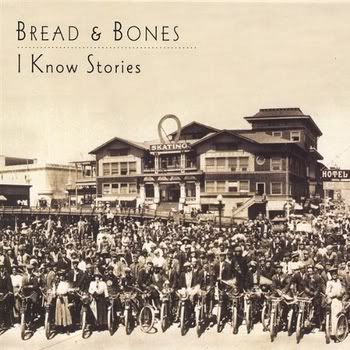
Bread and Bones: I Know Stories

[purchase]

I was going to have this album for my Spotlight feature this week before I knew what my theme would be, but it worked out beautifully. Bread and Bones are a trio from Vermont who feature wonderful male and female singers. At the last after party that I attended at The Falcon Ridge Folk Festival, I almost left before they went on. Something told me to stay, and I’m glad I did. I Know Stories is a great example of the group’s ability to inhabit a character and bring them to life. This particular song is also a wonderful telling of Jack and the Beanstalk from the point of view of the giant.

Thursday, August 5, 2010

For a Song: Rock and Roll Doctor


Little Feet: Rock and Roll Doctor

[purchase]

You will notice that this isn’t this week’s album review. Last weekend, things happened, and I didn’t get the time I needed to work on the review. I thought I would get to it now. But last night in my house, we had a medical scare. On the plus side, I can now report that all is well. But the blog gods are making it clear that I am not supposed to do a review this week. So, the review I planned for this week will appear next week instead. And, in the meantime, a trip to the doctor seemed very much to the point.

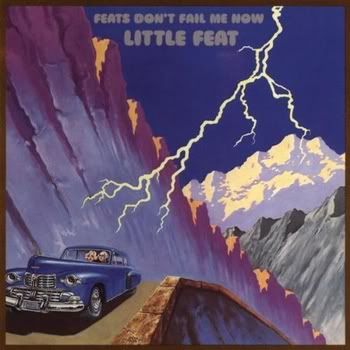
Rock and Roll Doctor is a fine example of what the real Little Feat sounded like. Active throughout the 70s, Little Feat wisely broke up when Lowell George died in 1979. But then the surviving members tried to bring the band back, and there is a band called Little Feet around even now. To me, though, Little Feat must have Lowell George singing, playing slide guitar, and writing many of the songs. By the same token, when George did a solo album in 1979, it wasn’t the same either. They didn’t always get along, but Lowell George and the other members of Little Feat needed each other.

Tuesday, August 3, 2010

For a Song: Otis and Marlena


Joni Mitchell: Otis and Marlena

[purchase]

This week’s album review is taking longer than I expected, so here is the For a Song feature in the meantime.

Everyone, or at least the vast majority of my readers, surely is familiar with the songs of Joni Mitchell. But far fewer people realize that the later part of her career has continued to yield great songs. Yes, her albums become more uneven as you go on, but the best songs are still as good as any of the early work for which she is so much better known. I love the early songs as much as anyone, and I will feature them here from time to time. But I also want to shine a light on some of the lesser known later songs. Otis and Marlena is a case in point.

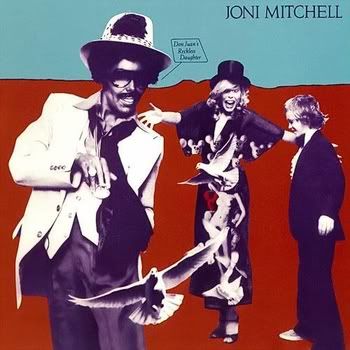
Hejira is probably the last album Mitchell’s old fans embrace. They accept this one adventure of Mitchell’s, playing electric guitar, so that they can lay claim to songs like Amelia and Coyote. But Mitchell followed that up with Don Juan’s Reckless Daughter. In retrospect, this was as poor a career move as Mitchell could have made. At the time, vinyl was still the dominant format for music, and Don Juan was a double album, correspondingly expensive. The second disc was dominated by two songs which had only Mitchell’s voice and a percussion ensemble. Within ten years, African music would start to make inroads with American audiences, but Mitchell was early, and audiences did not want to pay for two extra sides of vinyl to have these strange songs. So they missed out on the rest of the album, including Otis and Marlena. Ironically, the sound of this one is something of a throwback to Joni’s early sound, with an arrangement dominated by acoustic guitar and Mitchell’s voice.

The tone of the lyrics is another matter. Mitchell presents a couple who are vacationing in Miami, observing other people and the artificial ways they have tried to hold off the aging process. The chorus, in just a few words, emphasizes the triviality of all this. “While the Muslims stick up Washington” probably refers to incident that occurred nine months prior to the release of Don Juan’s Reckless Daughter, when a band of militant Muslims briefly took over the B’Nai Brith International Center in Washington DC, taking hostages and demanding the release of some of the members of their group who were in prison at the time. This incident is only referred to in the one line, and Mitchell assumes that her listeners would get the reference. Her focus though, is on the contrast with what Otis and Marlena observe. This is not a song that a younger Joni Mitchell would have written, and, as hard as it would have been to imagine at the time, a key reference has lost the resonance it held at the time. But Otis and Marlena is still a fine piece of writing, and the performance is vintage Joni Mitchell.